Who answers your clinic's WhatsApp after hours?
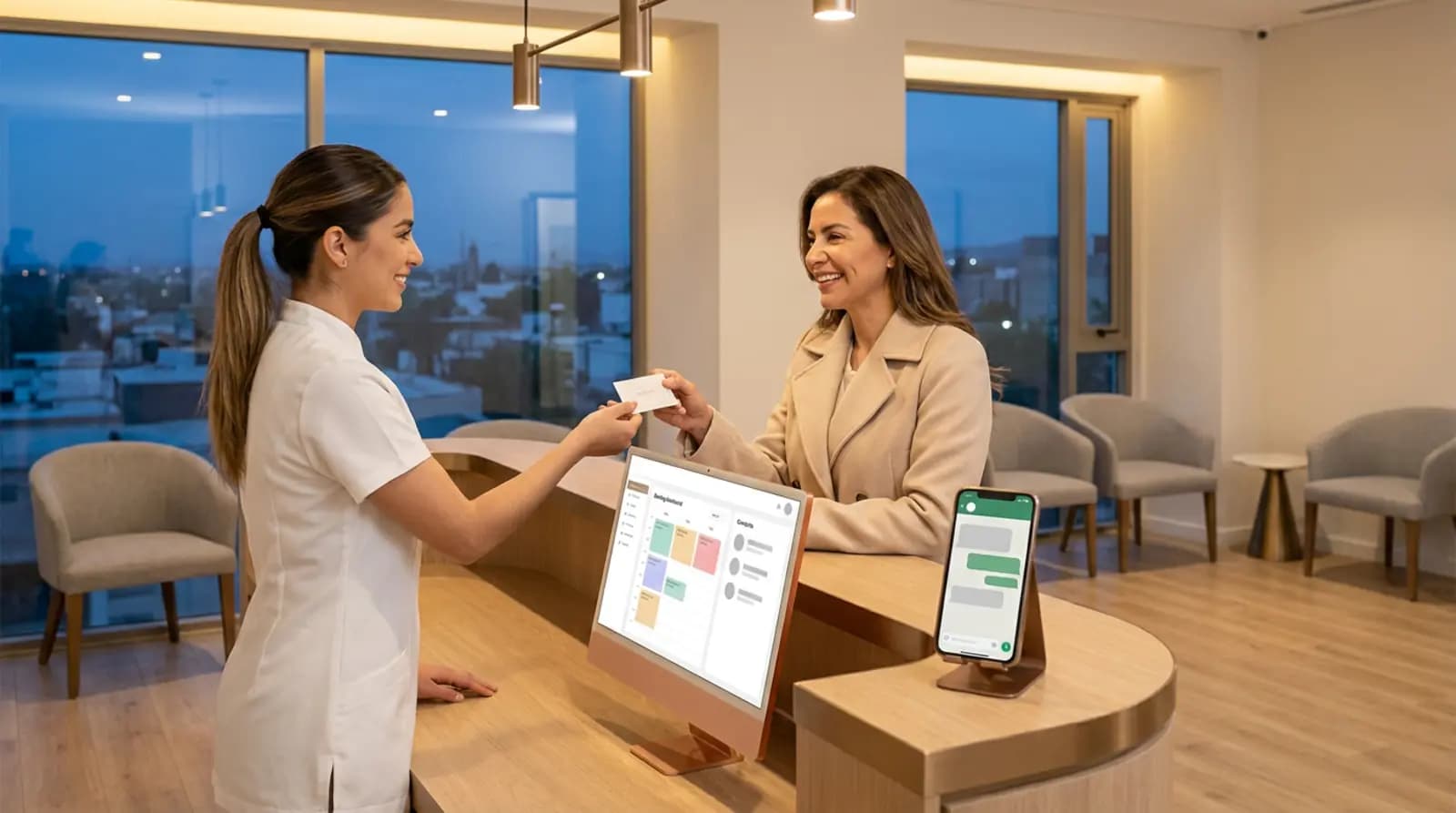
A patient in discomfort doesn't wait until the next day: they message several clinics and book with the first one that replies. If your clinic's WhatsApp goes unanswered at night or on weekends, another practice wins that appointment.
Quick answer
After hours, a clinic's WhatsApp should be answered by an AI assistant set up with the clinic's real information: it answers common questions, offers available times, books the appointment and leaves the team a summary to confirm first thing in the morning. Anything clinical or urgent always goes to a person or to emergency services; the AI does not handle it.
What happens when a patient messages at 10 p.m.?
Most likely they won't wait for your reply. It's common for people looking for an appointment to message several clinics at once and book with the first one that offers a time. Medical quality matters, but at that moment the patient doesn't know it yet: the only thing they can compare is who answered. After-hours messages are almost always like these:
- How much is a consultation?
- Do you have anything early tomorrow?
- Do you take my insurance?
- Where are you, and is there parking?
Why does this matter now?
Because patients already decide online before they reach the clinic. The study “El Paciente Digital Mexicano” by Doctoralia and Funsalud (2026) found that 90% of patients in Mexico research specialists online before booking and 84% read other users' reviews. If searching and comparing already happen on the phone, the first WhatsApp reply is part of that same decision.
Source: “El Paciente Digital Mexicano”, Doctoralia and Funsalud (via TechnoNoticias, in Spanish)
Why can't the front desk cover it?
It isn't a matter of the team's attitude. The front desk looks after the people in the waiting room, answers the phone and confirms the day's appointments; WhatsApp gets the gaps. After closing, messages pile up and are answered the next morning in order of arrival, when many of those patients have already booked elsewhere.
What can an AI assistant on WhatsApp handle, and what not?
A well-configured assistant handles the administrative side; anything clinical always goes to a person.
The assistant handles it
Prices, hours and location
It goes to a person
Symptoms, diagnoses or medical questions
The assistant handles it
Booking, changing or cancelling appointments in open slots
It goes to a person
Emergencies: tells the patient to call emergency services or come in right away
The assistant handles it
Requirements and preparation for tests
It goes to a person
Complaints or sensitive cases
The assistant handles it
Appointment reminders and confirmations
It goes to a person
Insurance authorizations that need review
| The assistant handles it | It goes to a person |
|---|---|
| Prices, hours and location | Symptoms, diagnoses or medical questions |
| Booking, changing or cancelling appointments in open slots | Emergencies: tells the patient to call emergency services or come in right away |
| Requirements and preparation for tests | Complaints or sensitive cases |
| Appointment reminders and confirmations | Insurance authorizations that need review |
How do you set it up without losing the human touch?
The assistant speaks in your clinic's tone and introduces itself as a virtual assistant; it never pretends to be a person. For it to work well:
- It is fed real information: the clinic's services, prices, doctors, hours and policies.
- It connects to the schedule so it only offers times that are actually free.
- It has clear escalation rules: urgent keywords or clinical questions are routed to, and flagged for, the person in charge.
- It leaves the front desk a summary of each conversation to confirm first thing in the morning.
- It handles patients' data in line with Mexican personal data protection law.
Where to start?
Before automating, measure how long your clinic takes today to send the first reply, especially at night and on weekends. If that reply only arrives the next day, that is your first opportunity. ATENEA ClinicSuite brings together online booking, a patient CRM and a 24/7 agent that answers WhatsApp in a single system.
Frequently asked questions
Can a chatbot give diagnoses or medical advice?
It should not. The assistant sticks to administrative information and scheduling; any clinical question is routed to the doctor or clinic staff.
What if a patient writes with an emergency?
The assistant is set up to recognize urgent keywords: when it does, it tells the patient to call emergency services or come in right away and alerts the person in charge at the clinic.
Does the patient know they're talking to an AI?
Yes. It's good practice for the assistant to introduce itself as the clinic's virtual assistant and offer to connect the patient with a person.
Does the assistant replace the front desk?
No. It takes over the repetitive work and covers the hours when nobody can reply; the front desk keeps caring for patients in the clinic and confirming the cases the assistant hands over.
Conclusion
The first reply decides many appointments before the patient ever meets your team. A well-configured assistant covers those hours and leaves every conversation ready for your team to pick up first thing in the morning.
Request a free assessment of your response time